
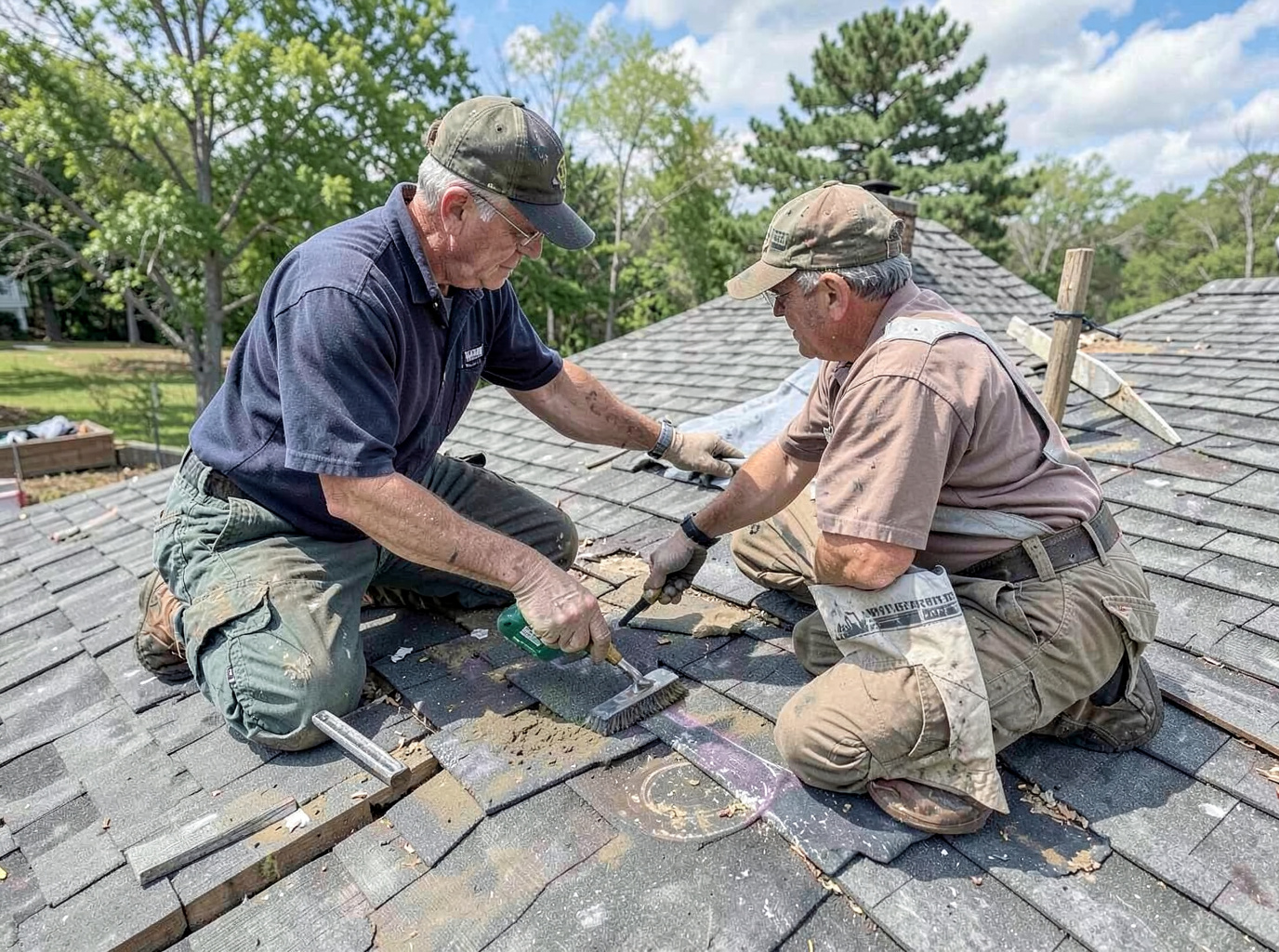
Janesville sits in a humid continental climate where cold winter winds and summer thunderstorms regularly test older roofs. Homes on the West Side and East Side often feature asphalt shingle layers installed decades ago that lift at the edges when gusts exceed 50 mph. Wind can pull nails loose or tear underlayment near ridges and valleys, letting water reach the decking before homeowners notice interior stains.
We inspect every seam and flashing after high-wind events that move through from Madison or Beloit. In neighborhoods like Courtney or near the Rock County Courthouse, mature trees drop branches that puncture shingles or dent metal flashing. We replace only the affected sections rather than entire slopes when the remaining material still meets current Rock County wind-load expectations, saving owners unnecessary expense.
Edge cases include ice dams that form along eaves after wind-driven snow packs into attic vents. These dams force water under shingles on the north-facing sides common in Downtown Janesville homes. We always check attic ventilation and insulation levels because poor airflow turns minor wind tears into recurring leaks once temperatures drop again.
Before any repair we document existing layers and deck condition so the fix complies with local permitting rules for re-roofing over existing material. This prevents future insurance disputes when the next storm crosses Rock County.
Technician insight
In Janesville the thing that catches most people out with Wind Damage Roof Repair is the second layer of shingles on 1960s West Side homes. Wind lifts the top layer first, but once water gets between layers it travels under the ridge and shows up two or three slopes away near the Rock County Courthouse area.
West Side Home After July Straight-Line Winds
Wind tore tabs along the south-facing slope of a two-story home near the West Side. We found water tracking under the ridge into the attic. We replaced the damaged tabs, resealed the ridge, and added extra fasteners at the eaves. No further leaks appeared after the next rain.
Wind Damage Roof Repair Services We Offer
✓Shingle Tab Replacement
Replaces lifted or torn tabs on asphalt roofs common in West Side and East Side homes after straight-line winds.
✓Ridge Cap Repair
Resecures or replaces ridge vents and caps pulled loose by gusts that funnel across open fields near Rotary Botanical Gardens.
✓Flashing and Valley Restoration
Reseals step flashing and valley metal around chimneys and dormers where wind drives rain on older Courtney neighborhood homes.
✓Gutter and Downspout Reattachment
Rehangs wind-loosened gutters so water continues to drain away from foundations on Rock County properties.
✓Tree Damage Assessment
Evaluates and repairs punctures from fallen limbs after storms that hit homes near Riverside Park and the Janesville Performing Arts Center.
Wind Damage Roof Repair Cost in Janesville, WI
| Service | Typical Range | What Affects It |
|---|---|---|
| Minor tab and flashing repair | $350–$750 | Single slope, one layer, easy access |
| Ridge and valley restoration | $600–$1,200 | Includes new ridge vent sections |
| Tree limb puncture repair | $450–$950 | Deck patch plus shingle replacement |
| Full wind damage assessment | Free | With repair authorization |
Ranges are typical for Janesville, WI and confirmed with an exact written quote before any work starts.
How it works
- 1
Initial Wind Event Inspection
We arrive during business hours, walk the roof and attic, and photograph every lifted shingle, missing tab, and damaged flashing.
- 2
Damage Documentation For Insurance
We create a detailed report noting wind direction patterns typical for Janesville so claims move faster with local adjusters.
- 3
Targeted Material Replacement
We match existing shingles, install new flashing where needed, and seal all penetrations before leaving the site.
- 4
Final Walkthrough And Cleanup
We check the repair from the ground and inside the attic, then remove all debris so the yard looks the same as when we arrived.
Pricing
Upfront quotes after on-site inspection; price varies with slope access and number of layers.